
Electric Kettle Lid Types: Choosing Easy Fill Designs
By Mina Kassem • 3rd Oct
Quick answer
No electric-kettle lid type is a universal winner. Choose based on the actual opening: how you will fill it, whether the manual permits your preferred route, and how you can access the interior for cleaning.
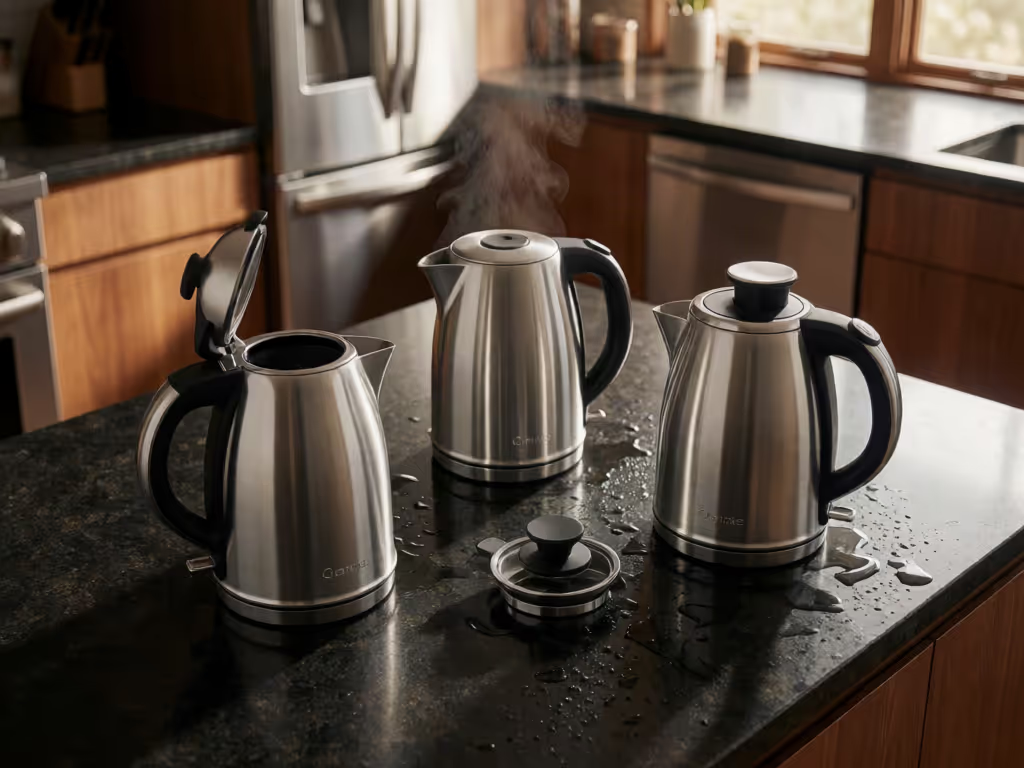
- What to compare: A documented lift-out lid provides direct top access when removed; button-opened lids may expose the opening automatically. Neither label proves convenient filling or cleaning.
- Why it matters: Independent testing found that a wide opening was easy to fill in one model, while a small opening made filling messier in another. Inspect the opening itself, not just the feature name.
- Buying check: Read the manual for approved filling and care instructions, and treat pouring performance as a separate decision from lid access.
Important: The available evidence is model-specific and does not establish universal advantages in durability, safety, opening angle, or cleanability.
Electric kettle lid types matter more than their labels suggest. A kettle with a lift-out lid, a button-opened lid, and a kettle described as "wide mouth" can all look straightforward online, until you try to fill to the line or reach inside for cleaning. For buyers seeking the best electric water kettle for a tight counter, tea routine, or shared kitchen, the useful question is not "Which lid type wins?" It is: How usable is the actual opening for your refill and cleaning routine?
That distinction is small. It prevents a bad purchase.
The evidence-backed comparison: access, not labels
The available evidence does not support a universal ranking of lift-out, hinged, or other kettle lids. Nor does it establish that one design lasts longer, is safer, or is easier to clean in every kitchen. Those are marketing-sized conclusions from a very small variable.
What the evidence does support is more practical: opening size and access can affect the experience of filling. In independent testing of individual kettles, a model with a wide opening was easy to fill, while a different model with a small opening was described as a little messy to fill. Those observations do not make "wide" an automatic winner. They do show why the opening deserves inspection before checkout.
Do not buy a lid label. Buy the access you can actually use.
A lid is a mechanism. For a closer look at how lift-out lids and base design affect everyday filling and handling, see this guide to 360° swivel base kettle ergonomics. The opening is the work area. Treat them as separate inspection points, even when a product listing bundles them into one claim.
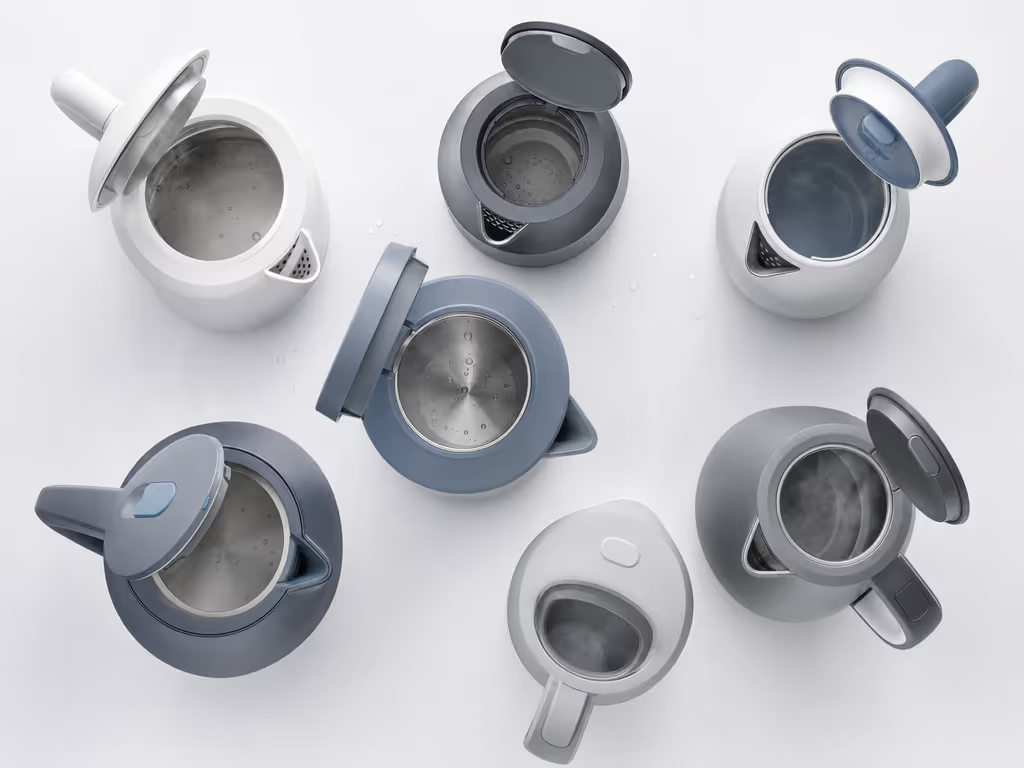
Lift-out lid example: direct top access
One manufacturer's instructions for a kettle with a lift-out lid make the basic workflow explicit: remove the lid, then fill through the top opening. The same instructions tell users to wash the interior carefully with soapy water and rinse it thoroughly. Because lid access and interior care are closely connected, review this electric kettle cleaning guide before choosing a design.
For that configuration, the top opening is directly available when the lid is off. It is worth considering if your routine centers on filling through the top rather than through the spout.
What to inspect before buying
Do not stop at "removable lid" in the title. Check the listing photos, manual, or an in-person display for these points:
- Usable opening: Can you see the opening clearly from overhead? Product labels alone do not establish its size.
- Fill route: Does the manufacturer instruct top filling after lid removal? Follow that model's directions rather than assuming every kettle permits the same method.
- Interior-care instructions: Does the manual explain how to clean the inside? This is separate from whether the lid comes off.
- Your lid routine: Where will the lid sit while you fill? This is not a durability or accessibility verdict. It is a daily-use question worth answering at the counter.
A retailer listing for one 1.2-liter lift-out-lid kettle says its design creates a wide opening for easier filling and cleaning. Keep the attribution attached: that is a product-specific retail claim, not proof that every kettle described as having a removable lid has a wide opening or is easier to clean.
Button-opened and hinged kettle lid designs: check the actual clearance
"Hinged kettle lid" is a common shopping term, but product descriptions can be loose. What matters in practice is the documented operation and the exposed opening once the lid opens.
For example, one manufacturer manual describes a kettle lid that opens automatically after its unlocking button is pressed. The same manual permits filling either through the spout or directly into the kettle. That is useful information for that model. It does not tell us how every button-opened lid behaves, how far it opens, or whether the opening will suit your faucet and vessel.
The skeptical read of a push-button claim
A button is evidence of an opening method. It is not evidence of an easy fill kettle design.
Before treating a button-opened lid as convenient, look for answers to these questions:
- What is the manufacturer-approved filling route? Some kettles permit spout filling; others direct you to open or remove the lid before filling.
- How much of the top opening is exposed in product photos? Do not infer this from the presence of a button.
- Can you locate the MAX line in the product documentation or imagery? A lid description does not answer this.
- Does the cleaning guidance require interior access? Read the care section, not only the feature bullets.
This is where specifications often become decoration. I learned that lesson while calibrating thermocouples in a cramped sublet: a claim becomes useful only when the measurable or observable behavior behind it is clear. If it's not measured, it's just marketing in italics.
Wide opening is a result to verify, not a lid category
"Wide mouth" is not a substitute for evidence. It describes an outcome a listing may claim, not necessarily the mechanism that produces it.
Independent testing offers the right level of confidence here. A wide opening made filling easy on one tested kettle. A small opening made filling a little messy on another. That is enough to justify inspection. It is not enough to promise that every broad-looking opening will fit your routine, or that every smaller one will frustrate it.
The clean buying rule is simple:
- Treat wide opening as an item to verify in images, dimensions when provided, and user documentation.
- Treat lift-out or button-opened as an operating description, not a performance grade.
- Treat pouring as a separate test category. Opening-related evidence concerns filling and interior access; it does not establish smooth flow, drip resistance, or pour-over control.
That last point matters for coffee buyers. A generous fill opening does not validate the kettle's pouring behavior. Control the variable, then judge the result.
A five-minute lid-access buying protocol
Use this sequence when comparing two otherwise suitable kettles. It is faster than debating style names and more likely to reveal a mismatch.
1. Start with your normal refill path
Do you normally fill straight from the faucet, or do you use another vessel? Then check whether the manual permits filling through the spout, directly through the top, or both. Do not assume permission carries across models.
2. Find the manual before relying on the product page
The manual may state the intended fill procedure and interior-care instructions. That is higher-value information than a vague "easy-open" badge.
3. Inspect the opening, not only the lid
Use overhead product images if available. You are looking for evidence of usable access, not trying to assign the kettle to a perfect taxonomy. Available sources do not provide standardized, category-wide definitions for terms such as removable and hinged.
4. Separate filling from cleaning
A kettle can be manageable to fill yet still leave you uncertain about interior access. Conversely, a documented lift-out lid can create direct top access but does not, by itself, prove category-wide cleaning superiority. Read the care directions.
5. Keep the lid decision in proportion
Lid access addresses filling and interior reach. Treat pouring performance as a separate consideration. Evaluate the other features that matter to your tea or coffee separately.
Final verdict: choose verified access, not a named lid type
There is no evidence-backed universal winner among electric kettle lid types. The better choice is the one whose documentation and images show an opening that matches how you fill, plus care instructions you can realistically follow.
Consider a kettle with a documented lift-out lid when direct top access fits your routine. Consider a button-opened or hinged kettle lid only after confirming its permitted fill route and the opening it exposes. If a listing says "wide," verify the visible opening rather than rewarding the adjective.
For an easy fill kettle design, the final test is modest and concrete: Can you confirm how you will fill it, where you will reach to clean it, and what the manufacturer actually instructs? If not, keep shopping. The best electric water kettle is not the one with the most persuasive lid language. It is the one with access you can verify.
Related Articles