
Electric Glass Kettles: How Cordless Design Improves Daily Use
By Ava Osei • 17th Sep
Quick answer
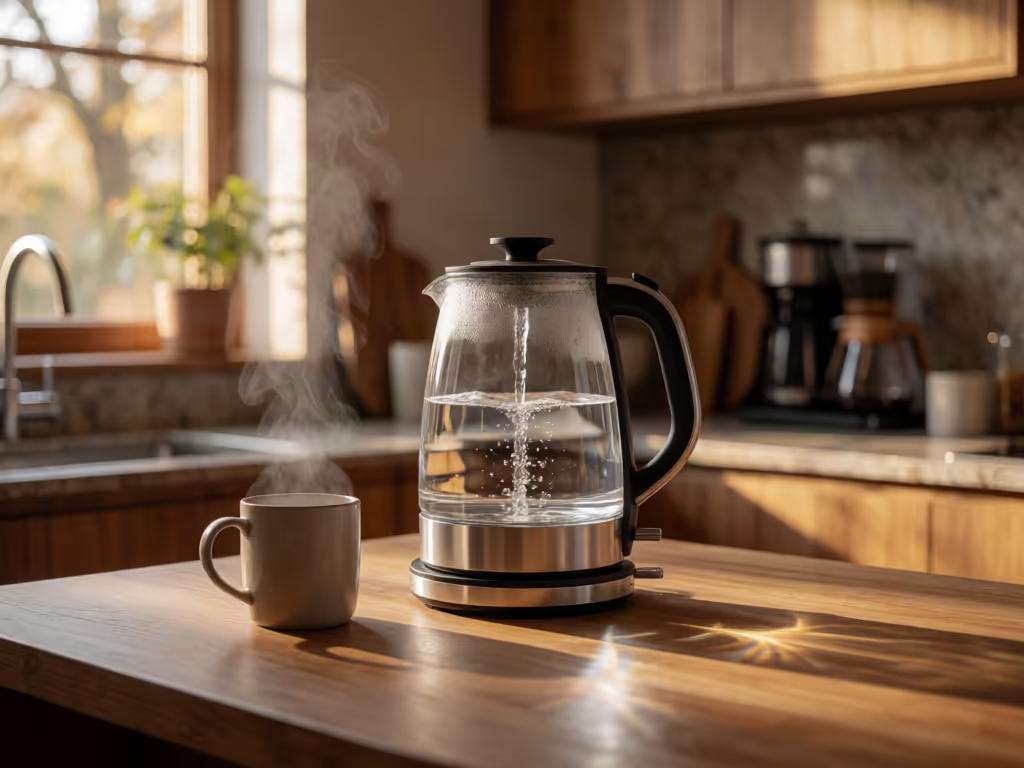
A detachable kettle/base arrangement can separate heating from serving. In the Gourmia model documented in its manual, you can lift the kettle from its base to pour, but a detachable design does not automatically mean better safety, energy efficiency, taste, or health benefits.
- Key distinction: In an independent evaluation, the glass body of one tested OXO model made the water level easy to see. That model retained heat less effectively than insulated stainless steel, so choose based on whether you pour immediately or need water to stay hot.
- What to check: Safety features are model-specific. Confirm automatic shutoff, boil-dry protection, lift-off behavior, materials in the water-contact path, and the base’s stable, dry placement in the exact manual.
Important: A glass body does not prove that the kettle is plastic-free, healthier, or better tasting.
A detachable-kettle example can make one part of the hot-water routine noticeably simpler: the Gourmia manual says to lift its kettle away from the base for serving. That is useful context for tea service, a desk-side mug, or a pour-over station. The key is to separate that documented arrangement from bigger claims it cannot prove, such as better energy use, better taste, or greater safety across every model. Small changes, big flavor.
FAQ: What does "cordless" mean on a glass electric kettle?
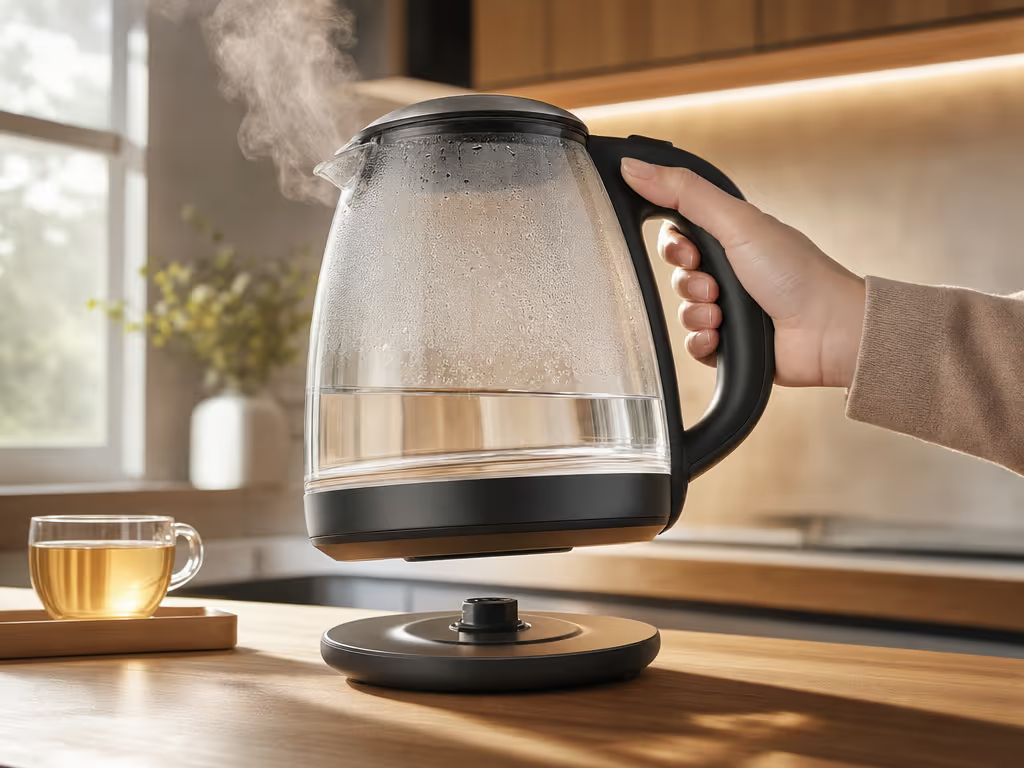
The term “cordless” needs a model-by-model reading. In the Gourmia manual cited here, the kettle is described as detachable for serving: lift it off the base and pour.
That manual also specifies returning the kettle to its base for keep-warm use. Think of that documented arrangement as untethered serving, with keep-warm instructions that remain specific to the model.
For a small kitchen, check your own manual before settling into a routine:
- Fill and heat according to the manufacturer’s instructions.
- Move to a clear, stable pouring area.
- Pour with the kettle handled as its instructions direct.
- Return the kettle to its base only when its manual calls for another heating cycle or a keep-warm function.
That last step matters. For a closer look at how base stability affects kettle safety, compare resistance to tipping and weight distribution as well as the cordless mechanism. A clean routine is safer when the base stays on a dry, level surface and the kettle is set down deliberately.
FAQ: How does a cordless base improve daily pouring?
The documented Gourmia arrangement allows the kettle to be lifted from its base for serving. That is the practical feature to verify in the manual for any kettle you are considering.
For coffee or tea, review the product specifications and instructions for the serving experience you want rather than assuming every glass electric kettle is built for the same kind of use.
A simple pre-pour check helps across styles:
- Confirm the lid is properly seated.
- Hold the handle securely before lifting.
- Carry the kettle with the spout pointed away from you and others.
- Pour over a stable vessel on a level surface.
- Put the kettle back on its base or another safe resting spot after pouring.
Precision is a habit, not an advanced setting.
FAQ: Does a removable base make an electric glass kettle safer?
It can support a safer routine, but safety features are model-specific, not automatic results of a glass body or a cordless base.
One manufacturer says its tea maker stops electricity flowing to the base contact pins when the kettle is lifted from the base during heating. The same manufacturer describes boil-dry protection that cuts power when sensors detect an abnormal rapid rise in temperature without water. Those are worthwhile features to look for in a manual, but they should be confirmed for the exact kettle you are considering.
Use this buying and setup checklist:
Before buying
- Does the manual explicitly list automatic shutoff?
- Does it explicitly list boil-dry protection?
- What happens if the kettle is lifted from the base mid-cycle?
- Is there a stated maximum-fill line that you can read easily?
- Are the handle, lid, and base-use instructions clear enough to follow without guesswork?
At home
- Keep the base dry and on a stable counter.
- Fill only within the manufacturer's marked range.
- Do not assume a lift-off safety response unless your kettle's instructions say so.
- Check current safety notices for a specific model through the official CPSC recall database in the U.S.; its search tools include electric kettles and hot pots, with hazard categories such as burns, scalding, electrical shock, and fire.
Good gear should make the safe choice easy. Clear markings and plain instructions are not decorative details; they reduce the chance that a rushed morning turns into a spill.
FAQ: What does the glass body add, and what does it not add?
The clearest day-to-day advantage in the independent evaluation was visibility. A tested OXO glass model made the water level easy to see. That can help you heat an amount closer to what you actually need instead of relying on a hidden gauge.
Visibility is especially useful when you are building a repeatable routine. If you make one mug of green tea, you can see the water level before you start. If you are serving a group, you can check whether there is enough before carrying the kettle away from the base.
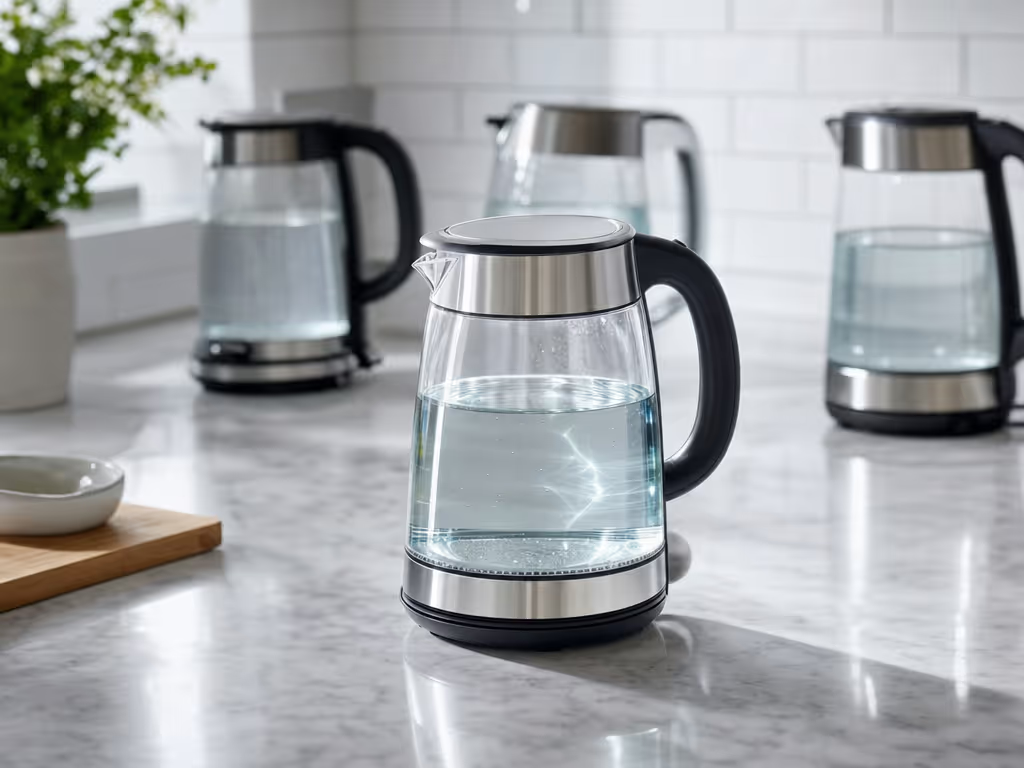
There is a trade-off to keep in mind. A single-wall versus double-wall comparison can clarify how insulation changes heat retention, exterior temperature, and everyday handling. The same independent evaluation observed that the tested OXO glass kettle did not retain heat as well as insulated stainless steel. If you want water to stay hot after it leaves the base, do not choose based on appearance alone. Read the specifications and test your own routine: heat, pour, and brew without unnecessary waiting.
Glass construction also does not establish that every part touching water is glass. One manufacturer's glass-kettle series lists stainless steel, polypropylene, and silicone among materials used across its designs; its double-wall version is described as having an inner glass layer and an outer plastic layer. So, if minimizing particular materials matters to you, inspect the exact model's lid, seals, filter, heating plate, and water path rather than trusting the word "glass" on its own.
Some makers use borosilicate glass and describe it as resistant to thermal shock. Treat that as a manufacturer material claim, not a promise that a kettle cannot break or that every glass kettle has the same construction.
FAQ: Will cordless glass kettles save energy or boil faster?
There is not enough category-level evidence to say that cordless kettles use less energy than corded ones. The detachable base primarily changes how you serve, not necessarily how efficiently the kettle heats.
Electric kettles can be quick in general: in one independent test, nearly every tested kettle brought 3.5 cups of water, starting at 57°F, to a boil in under five minutes. But that finding was not a cordless-versus-corded comparison, and it is not an energy-use measurement.
The practical habit is straightforward: heat the amount of water you plan to use, within your kettle's marked minimum and maximum levels. For more ways to reduce electricity use, see these smart kettle-saving practices, including how water volume affects each boil. Then choose temperature and timing that suit your drink. A friend who thought every green tea tasted bitter found the difference at a gentler 80°C setting and a timed steep, not by changing the ritual, but by making it repeatable.
For anyone comparing a cordless stainless steel electric kettle with a glass option, ask two separate questions:
- Do I value a visible water level while heating?
- Do I need stronger heat retention once the kettle is off its base?
Neither answer is universally better. It depends on whether you pour immediately or need hot water to wait.
FAQ: Is a glass kettle healthier, plastic-free, or better for taste?
This is where careful language matters. The collected sources do not provide an independent health comparison of glass kettles or kettle materials. They also do not support a broad conclusion that glass tastes better or that all glass kettles are plastic-free.
Manufacturers may make taste, odor, or material-purity claims for their own products, but those claims are not the same as independent health or materials-migration testing. Keep your decision grounded in what you can verify for the exact kettle: its listed materials, water-contact components, instructions, and safety features.
FAQ: What should I prioritize for a repeatable daily routine?
A cordless electric glass kettle is most useful when its layout supports the way you actually brew. Use this short decision path:
- For green tea or other temperature-sensitive drinks: prioritize clear temperature controls and an easy-to-read display; follow the kettle's instructions and use a timer for the steep.
- For shared serving: prioritize comfortable lifting from the base, a secure lid, and a visible fill level.
- For a compact counter: confirm the base footprint and plan a stable, dry home for it near an outlet.
- For water that must remain hot after heating: compare heat retention rather than assuming glass and insulated steel perform alike.
- For safety confidence: read the manual before purchase and verify shutoff, boil-dry protection, and lift-off behavior individually.
Further exploration
A detachable design is a modest feature with a documented serving benefit in the Gourmia example: its manual says the kettle can be lifted from the base to pour. Start with your most common drink, measure the water you normally use, and practice the same fill-heat-pour sequence for a few days. You will quickly learn whether you value glass visibility, insulated heat retention, temperature control, or simply a clearer path from kettle to cup.
Consistency does not require an elaborate setup. It begins with a kettle you can read, lift, and use safely, cup after cup, like clockwork.
Related Articles