Electric Water Kettle Fill Markings for Accurate Brews
By Sasha Petrovic • 7th Oct
Quick answer
Use your electric kettle’s own instructions as the starting point. The Russell Hobbs Wentworth RHK45 and Haden Dorset documents reviewed here both give minimum/maximum filling guidance, but they do not establish one fill amount for every kettle.
- Short answer: Check your model’s instructions and follow its stated filling guidance. There is no universal fill amount established here for every kettle.
- Key distinction: The available evidence does not establish standardized meanings or accuracy tolerances for liter, cup, or intermediate markings across kettles.
- Important caveat: For the Haden Dorset, boil-dry protection is described as a safety feature rather than a substitute for proper filling.
The kettle documents discussed here give filling instructions, while a brew recipe may separately state a water quantity. Treat the marks as instructions for the specific kettle rather than automatically as a precision recipe instrument. That distinction makes a kettle-filling workflow clearer and helps keep model instructions in view before you brew.
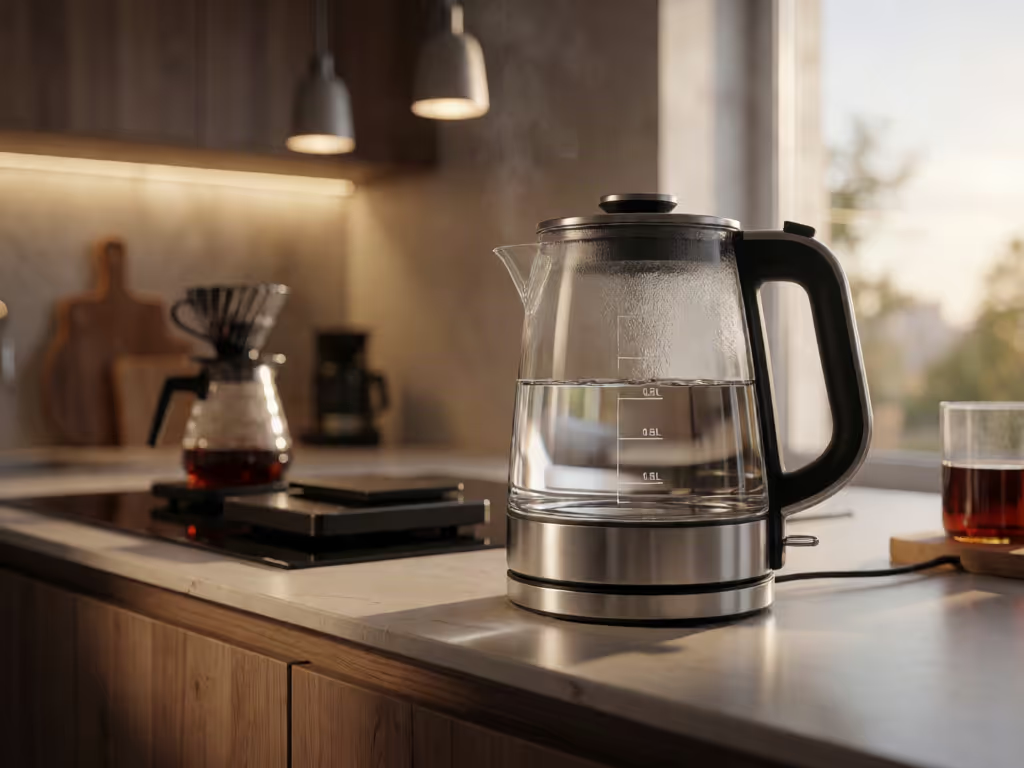
A water level indicator is part of the filling task in an electric-kettle UX case study: the user watches it to avoid overfilling. When your kettle’s instructions identify a permitted range, look at the indicator while adding water and stop within that range. In a crowded cupping lab years ago, I learned how quickly "identical" work can drift when one uncontrolled variable slips in. In that case, the surprise was hidden inside a gooseneck; here, it is usually more visible: ignoring the limits printed or molded into the kettle.
Flow rate is the hidden governor of extraction. But the kettle must first be filled according to its instructions. Flow before foam.
What do kettle fill markings actually tell you?
The available documents show two different model-specific instructions:
- Russell Hobbs Wentworth RHK45: Fill with at least two cups of water and do not fill above the max line.
- Haden Dorset: Keep water between the minimum and maximum markings.
- Liter, cup, and intermediate markings: The available evidence does not establish standardized meanings or recipe-level calibration accuracy for these markings across kettles.
A retailer-hosted document for the Haden Dorset identifies a 1.7 L maximum capacity as "7 cups." That is a stated capacity equivalence for that kettle, not proof that every kettle cup marking means the same volume, or that each line is appropriate as a precise brewing dose.
This is the assumption check worth making before you build a routine around markings: does your manual give a filling instruction, or does it explicitly establish a marking as a precise volume measurement? The Haden Dorset document provides a filling instruction and a stated maximum capacity. Neither document establishes category-wide accuracy tolerances for domestic kettle graduations.
Why should you stay between the minimum and maximum lines?
The answer is model-specific operating guidance.
For the Russell Hobbs Wentworth RHK45, the instructions say to fill with at least two cups of water and not above the max line. The same manual states that overfilling may cause boiling water to be ejected from the spout. It also says insufficient water will shorten the life of the element.
The Haden Dorset document gives a different instruction: keep water between its minimum and maximum markings. It also describes boil-dry protection as a safety feature, not a replacement for proper filling.
Those examples do not establish a universal minimum amount, maximum capacity, or failure mode for every electric kettle. They do support a cautious decision rule:
- Find your own model's filling instructions.
- Read the manual for its specific guidance.
- Follow that guidance when you heat water.
A boil-dry cutoff should not be treated as permission to routinely operate below a minimum-fill instruction. In the two documents reviewed here, protection features and proper-filling instructions serve different purposes.
Can fill markings make brews more accurate?
The documents reviewed here do not establish whether kettle markings improve starting-volume consistency or recipe accuracy.
For coffee and tea preparation, separate the kettle’s filling instructions from any water quantity stated by your recipe. If your brew also depends on precise heat, review lab-tested kettle temperature accuracy separately from fill-volume control.
1. Safe fill control
For the Russell Hobbs Wentworth RHK45 and Haden Dorset, follow the filling instructions stated for those models. This is where their minimum and maximum guidance applies.
2. Recipe quantity control
Decide how precisely your recipe needs water quantity managed. The evidence available for kettle markings does not establish their calibration accuracy, their tolerance, or whether a visible "cup" corresponds to a common culinary measure. Therefore, do not build a highly repeatable brew protocol on the untested assumption that every graduation is exact.
That is not an argument against following your kettle’s instructions. Water composition is another variable worth separating from the markings themselves; learn how water minerals affect kettle temperature accuracy before troubleshooting inconsistent brews. It is an argument for keeping filling instructions and recipe measurements as separate questions. A clear workflow can be as simple as this:
- Determine the water quantity your recipe calls for.
- Check whether that amount fits the filling instructions for your kettle.
- If the recipe quantity would fall below a stated minimum, consult the kettle's instructions and adjust your brewing workflow rather than bypassing that instruction.
This approach respects controllable constraints instead of pretending they do not exist. It also keeps a small-volume coffee or tea routine from turning into an appliance-use compromise.
Is a water-level window better than interior markings?
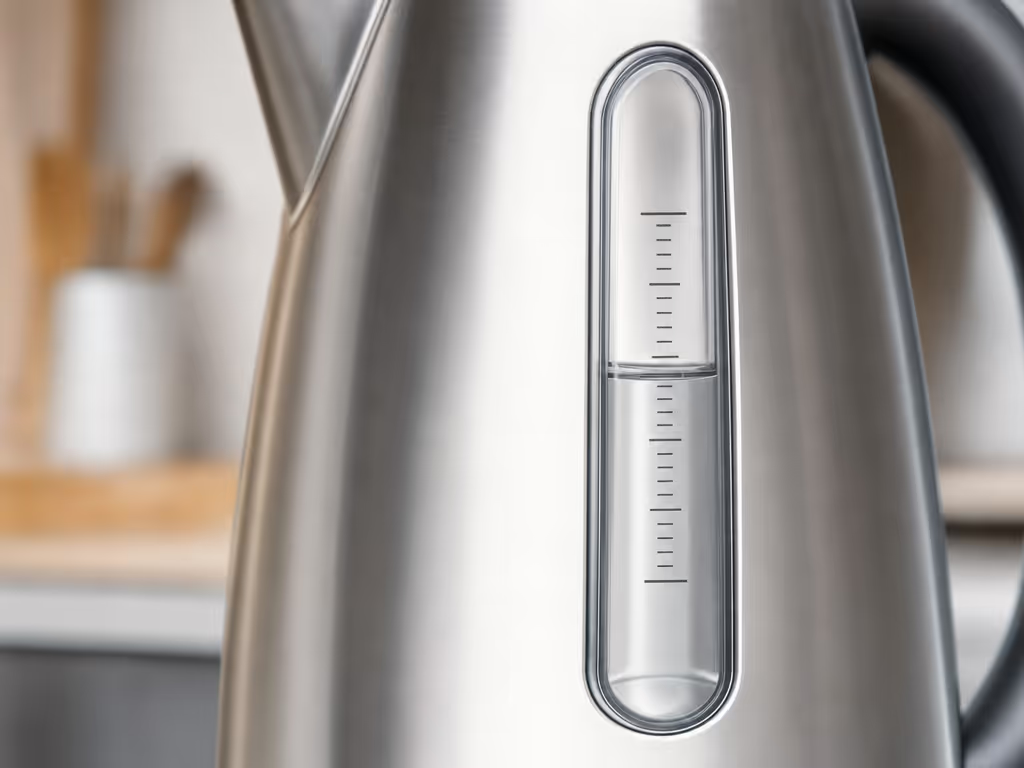
There is not enough evidence here to rank external windows against internal markings for accuracy, safety, or readability. The useful question is more practical: can you reliably see the applicable reference while you are filling?
A human-factors case study of kettle use identifies watching the water-meter indicator to avoid overfilling as part of the filling task. That is a sensible design lens: the indicator must support perception, then a decision, then action: see the level, recognize the limit, stop filling.
Before relying on a kettle in your daily setup, inspect it in the conditions where you actually fill it:
- Can you locate the minimum and maximum references without guessing?
- Can you identify which mark is which?
- Does the indicator remain visible while water is entering the kettle?
- Does your normal fill quantity fit the instructions for that model?
These are inspection questions, not claims that one marking format is universally superior. The best interface is the one you can interpret correctly in your own workflow.
What should you look for in kettle capacity markings?
Think in terms of clarity rather than marketing language. A useful set of kettle capacity markings should let you answer three questions quickly:
- What filling guidance does the manual give?
- What is the stated maximum, if one is provided?
- Where is the current water level relative to the references identified for that model?
If a kettle lists liters, cups, or several intermediate lines, do not treat those labels as proof of laboratory-grade volume measurement. Product documents can change across revisions, and markings are not shown here to have a category-wide calibration standard.
For separate information on kettle temperature control, see temperature-control guidance. It prevents a false precision problem: a line may look numerical, yet the available evidence does not establish its metrological accuracy.
FAQ: How full do you fill an electric kettle?
Follow the filling guidance specified for your particular model. Do not substitute another kettle's minimum amount or capacity for yours. For example, the Russell Hobbs Wentworth RHK45 manual specifies at least two cups and warns not to exceed its max line; the Haden Dorset document likewise directs users to remain between its minimum and maximum marks. Those are model-specific instructions, not a universal fill rule.
Summary and final verdict
The Wentworth RHK45 and Haden Dorset documents both provide model-specific filling instructions. For another kettle, consult its own instructions rather than assuming the same minimum amount, maximum capacity, or marking meaning applies. Treat liter and cup labels cautiously unless your own documentation explicitly defines their precision. And assess the water level indicator as an interface: consider whether you can read it confidently while filling.
The final verdict is simple: follow your kettle's own filling instructions first, then use a separate measurement method when your recipe needs a defined water quantity. That keeps the appliance guidance and the brew recipe from being mistaken for the same instruction.
Related Articles