Kettle Hot Water Vs Instant Taps: Energy And Convenience
By Sasha Petrovic • 2nd Sep
Quick verdict
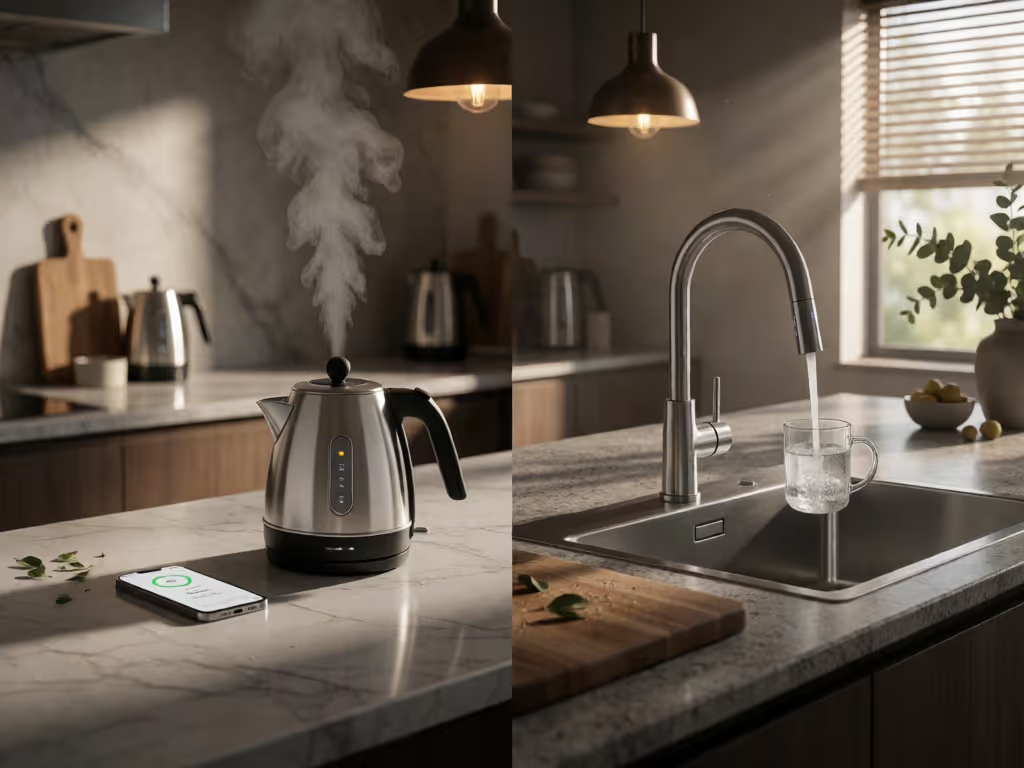
Quick verdict: Choose an electric kettle for flexible, measured batches. Choose an installed InSinkErator-style tank-and-faucet dispenser when immediate sink-side hot water matters more than installation requirements. The evidence does not establish a universal energy winner per mug.
- Choose the kettle if: Your water demand varies, you can avoid overfilling, or you need a larger batch of genuinely boiling water.
- Choose the alternative if: Dedicated faucet access is the priority and your sink has the required mounting space, water connections, and grounded outlet.
- Main trade-off: Kettle energy use is easier to relate to each volume heated. Installed systems add standby and recovery questions that were not directly measured here, so running-cost claims remain system- and usage-dependent.
Important: A countertop dispenser cost comparison should not be treated as direct evidence for installed under-sink taps; local plumbing and electrical requirements also need checking.
For kettle hot water, the central comparison is not simply "fast versus efficient." It is a question of heating geometry: how much water is heated, when it is heated, and whether the system consumes electricity between drinks. That distinction matters to anyone watching kettle electricity usage while also trying to make reliable coffee, tea, or a steady morning routine.
An electric kettle heats a batch when you use it. The InSinkErator system discussed here uses a heated tank under the sink and a separate faucet, putting hot water at the sink after the system has reached temperature. Both can be sensible choices. The better one depends on your draw pattern, counter and sink constraints, and whether instant availability outweighs installation complexity.
Flow rate is the hidden governor of extraction.
That is relevant here because convenience should not be mistaken for brewing control. Temperature at the source, quantity dispensed, and how the water reaches the cup are separate variables. Repeatability is a precondition, not an optional luxury when flavor is the outcome you care about.
The Energy Question Starts With Volume
The physical requirement is straightforward: heating more water requires more energy. For a deeper explanation of heating elements, temperature control, and the physics of electric kettles, see our technical guide. Under an idealized calculation, taking 1 litre of water from 15°C to 100°C requires about 0.1 kWh of heat. Real appliances have losses; an academic review reports typical electric-kettle thermal efficiency in the 80–90% range.
Useful practical reference points from that review are:
- Boiling 0.5 L in an electric kettle: approximately 0.055 kWh
- Boiling 1.0 L in an electric kettle: approximately 0.11 kWh
These are not universal meter readings for every kettle, water temperature, or household. They are, however, the right scale for evaluating the habit that dominates kettle energy use: filling well beyond the amount you will drink. A two-year study of 14 UK households identified overfilling as a source of wasted kettle energy.
What this means in daily use
A kettle rewards accurate water use. Need one mug? Heat roughly one mug, subject to the appliance's own minimum-fill marking. Need a pot or several drinks? Heat the batch required. The mistake is treating a full vessel as the default setting for every use.
For coffee and tea preparation, decide the batch volume before heating if you want to avoid unnecessary energy use.
Instant Hot Water Tap Energy: What We Can, and Cannot, Conclude
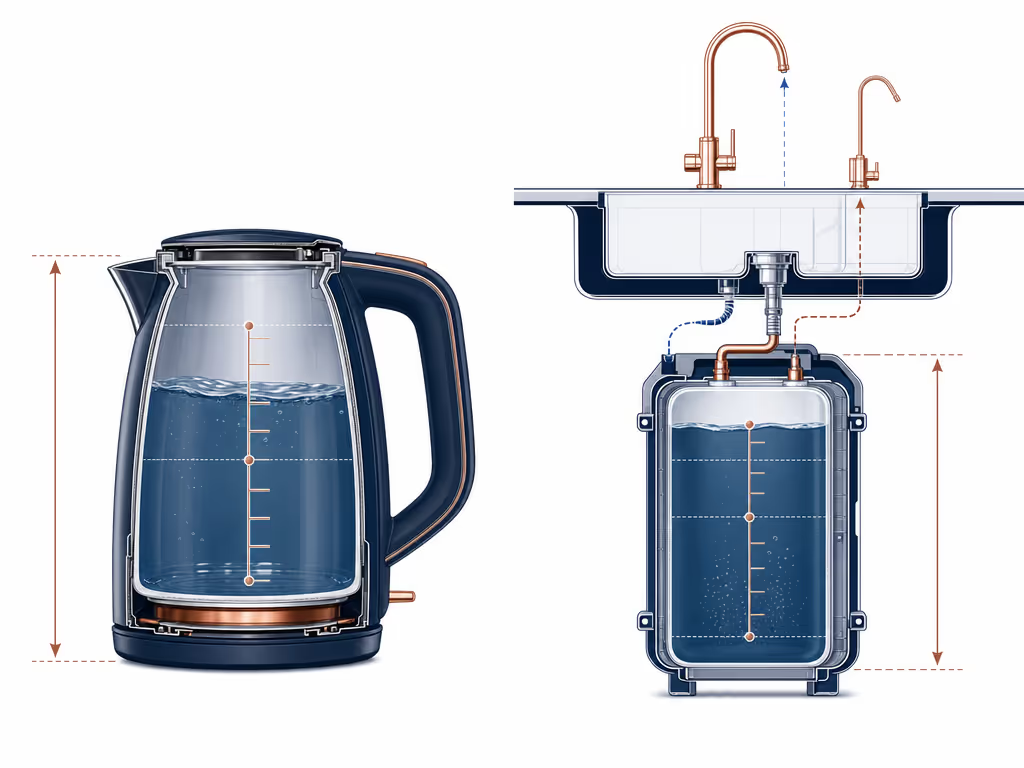
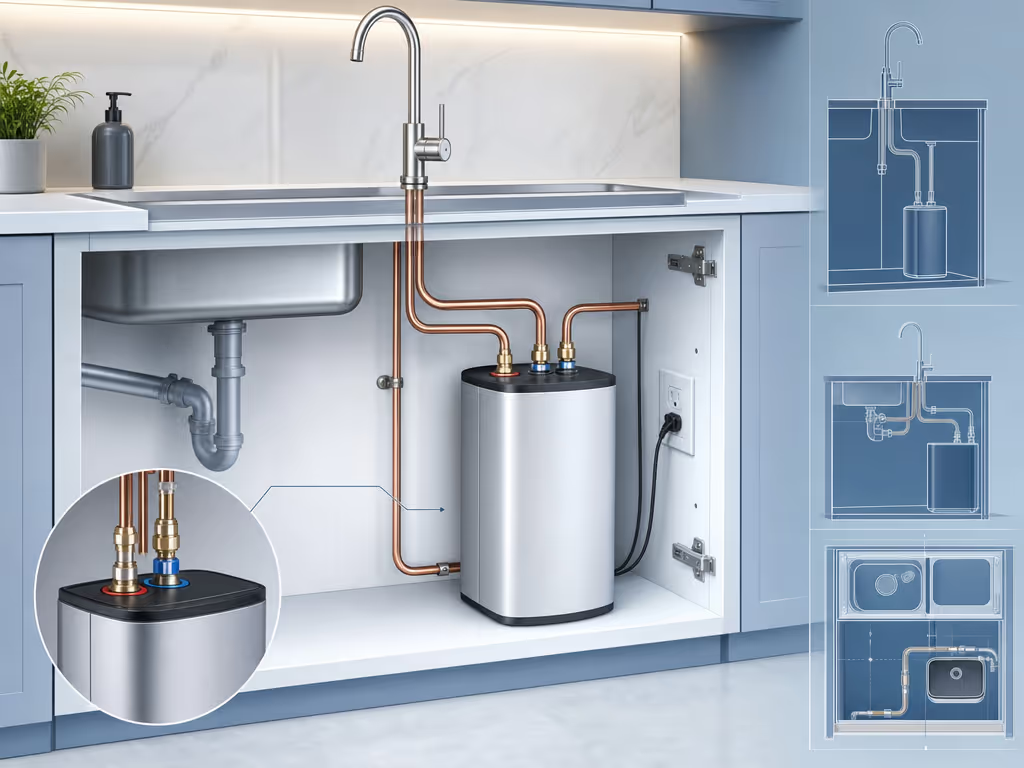
One InSinkErator setup consists of a compact tank mounted under the sink and a dedicated dispenser faucet. Once installed and filled, the manufacturer says this setup takes 10-15 minutes to reach its target temperature. Its HWT-300 tank has a manufacturer-stated selectable range of 190-210°F.
The convenience is clear in this specific design: hot water is available at the dedicated faucet after warm-up, without the kettle's fill-and-boil step. But it would be inaccurate to treat that description as proof that every installed tap works the same way, or to declare installed taps universally cheaper per mug.
There is no direct, like-for-like meter test here comparing an installed under-sink boiling-water tap with a kettle at one defined mug size. In the evidence available here, no independent data quantifies standby electricity, recovery losses, or annual energy cost across a representative sample of installed tank systems.
Do not confuse installed taps with countertop dispensers
An independent CHOICE comparison is useful, but only within its boundaries. It examined standalone countertop on-demand hot-water dispensers, not sink-mounted, under-sink tank-and-faucet systems. Those countertop units heat the user-selected amount rather than an entire kettle fill.
In CHOICE's August 2025 published Australian scenario—boiling a full kettle a couple of times daily for a year—the reported kettle estimate was about $32 per year. This scenario-specific figure depends on the electricity tariff, kettle size, and use pattern. In that same published comparison, two tested countertop dispensers were reported at just over $27 per year in active energy, plus about $1.80 per year in standby electricity; those estimates are likewise specific to CHOICE's test scenario and can change with electricity pricing and use.
Those figures cannot settle the installed-tap question. For a broader look at appliance consumption, manufacturing impact, and sustainability, read our guide to electric kettle energy waste. Electricity tariffs, appliance formats, fill quantities, use frequency, and standby behavior all change the result. The comparison does reinforce one general rule: energy claims are only meaningful when the water volume and use pattern are stated.
Convenience: Countertop Routine Versus Sink-Based Access
A boiling water appliance comparison becomes clearer when convenience is broken into tasks rather than treated as a feature list.
Kettle: best when your hot-water demand is variable
A kettle's working pattern is simple: fill a batch, heat it, then use it. This favors households where demand changes from a single tea to several drinks, or where careful filling is part of reducing unnecessary energy use.
The physical footprint can also matter. In the CHOICE comparison, kettles were listed as having a smaller footprint than the countertop dispensers tested; those dispensers were heavier units and could be difficult to move. That finding concerns countertop dispensers, not installed taps, but it is relevant if your counter is already crowded.
For exact brew-temperature work, do not assume the appliance category answers the question. If green tea, oolong, or pour-over coffee is your priority, verify the specific appliance's temperature behavior rather than relying on a stated setpoint alone. I learned the value of that discipline after a tiny obstruction in a gooseneck made apparently identical pours diverge; the cup exposed a variable the display could not.
Installed hot-water tap: best when sink access is the priority
The InSinkErator system supplies hot water from its under-sink tank at a dedicated faucet. It may suit a shared kitchen where people want water at a dedicated faucet without occupying counter space during use.
However, convenience shifts from daily handling to installation planning. For the InSinkErator setup, manufacturer requirements include:
- A standard 1 3/8-inch sink mounting hole
- An under-sink electrical outlet
- Tank placement within 16 inches of the faucet water lines
- Tank placement within 30 inches of a standard grounded outlet
That is why hot water tap installation vs kettle is not an equal-friction decision. The tank-and-faucet system is site-dependent. Check local plumbing and electrical requirements before treating installation as a simple DIY task.
The same restraint applies to safety features. InSinkErator says its spring-lock push-down hot-water lever returns to position when released. Consider that a manufacturer description of its own designs, not a category-wide safety guarantee.
Decision Framework: Match the Appliance to the Water Pattern
Use this short decision path rather than chasing a blanket efficiency verdict.
Choose a kettle when
- Your water volume varies substantially from use to use.
- You can reliably fill close to the amount needed.
- You do not want to plan around a tank-and-faucet system's mounting and outlet requirements.
- You need a batch of genuinely boiling water and want direct control over when it is heated.
- You are optimizing energy through behavior rather than maintaining an installed hot-water reserve.
Consider an installed tank-and-faucet dispenser when
- Immediate sink-side hot water is more valuable than a fill-and-boil routine.
- Your sink has the required mounting space, water connections, and nearby grounded outlet for the selected system.
- You understand that evidence for one tank-based design should not be generalized to every instant tap.
- You are prepared to evaluate the particular system's electrical behavior and installation needs rather than assuming a universal operating-cost advantage.
Consider a countertop on-demand dispenser when
- Portion selection is the attraction, but an installed system is impractical.
- You have room for a heavier countertop appliance.
- Your intended use does not require a large quantity of near-boiling water. In CHOICE's tests, the dispensers measured around 83°C after dispensing 1 L, which may limit their suitability for larger boiling-water tasks.
FAQ: Kettle Electricity Usage in Context
Do electric kettles use a lot of electricity?
Not as a fixed amount. Electricity use rises with water volume: the available examples are about 0.055 kWh for 0.5 L and 0.11 kWh for 1.0 L. Overfilling is the avoidable loss to focus on.
How much electricity does a kettle use per day?
Multiply the energy for the volume you boil by the number of heating cycles. Without knowing both, there is no defensible universal daily figure. For example, two 0.5-L boils would be approximately 0.11 kWh using the cited practical example.
How much does it cost to run a kettle for one hour?
An hourly cost cannot be stated from time alone. The energy used depends on the volume heated, while the cost also depends on your electricity tariff. Volume-based energy is the more useful measurement for this appliance.
Final Verdict
For energy-conscious use, a kettle is the clearer choice when you consistently heat only the required volume. Its approximate energy demand scales visibly with each batch, which makes waste easier to prevent.
An installed InSinkErator-style hot-water system offers a different advantage: ready sink-side hot water from an under-sink tank. For a related comparison, our single-wall versus double-wall insulation comparison examines those differences in detail. Yet it carries real installation constraints, and the available evidence does not support a universal claim that it beats a kettle on energy per mug or annual running cost.
Choose the kettle for adaptable, measured batch heating. Choose an installed dispenser only when immediate faucet access and a suitable installation outweigh the need for that flexibility. In either case, define the volume, temperature, and routine first. The controllable physics, not the label on the appliance, determine the result.
Related Articles
Electric Kettle Energy Waste: How Smart Water Use Cuts 30%
Cut kettle energy waste by about 30% with simple, repeatable habits - measure only what you need, avoid reboils, descale regularly, and use precise temperatures - to lower your carbon footprint and improve flavor. Get a quick 3-step routine and practical advice on when kettle features help versus waste power.
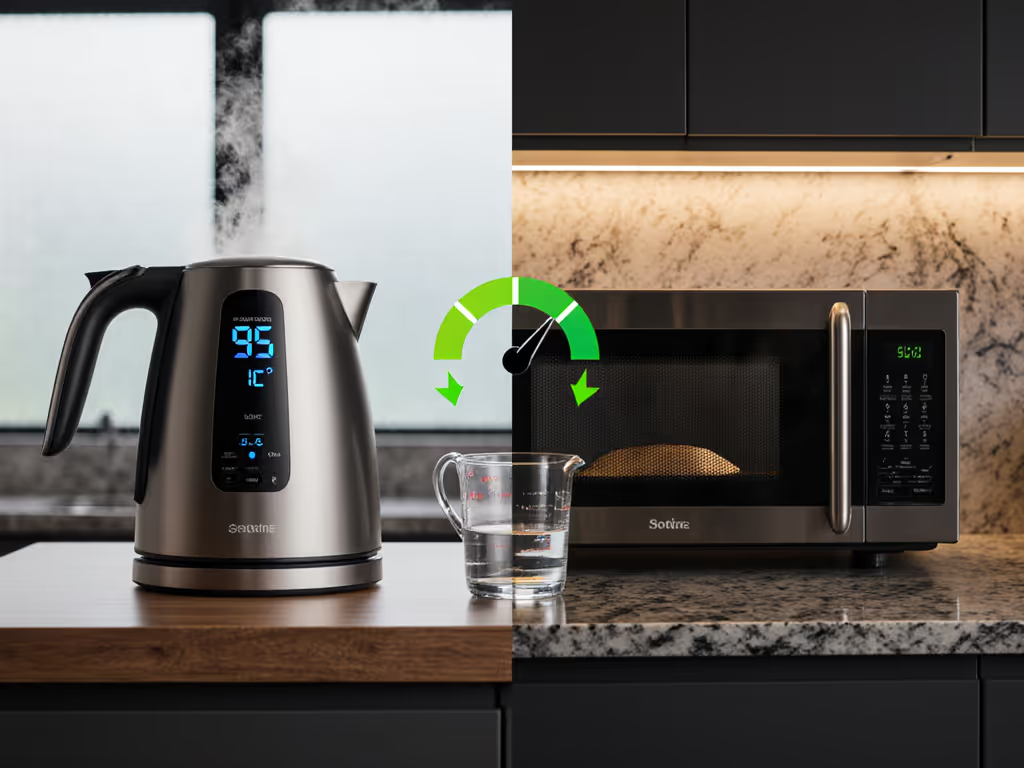
Kettle vs Microwave: Energy Efficiency and Temperature Accuracy
Instrumented tests show electric kettles are roughly 56% more energy-efficient and markedly more temperature-accurate than microwaves, improving flavor while reducing cost and safety risks. Use the head-to-head data on efficiency, accuracy, speed, and safety to choose the right tool for coffee, tea, and everyday heating.
Reduce Kettle Electricity Use Per Boil: Smart Savings
Cut kettle energy use by 40–50% and improve brew consistency with physics-driven habits: boil only what you need, choose insulated variable temperature kettles, leverage residual heat, and descale regularly. Clear comparisons to microwaves and gas and a practical framework turn small per-boil savings into meaningful monthly gains.